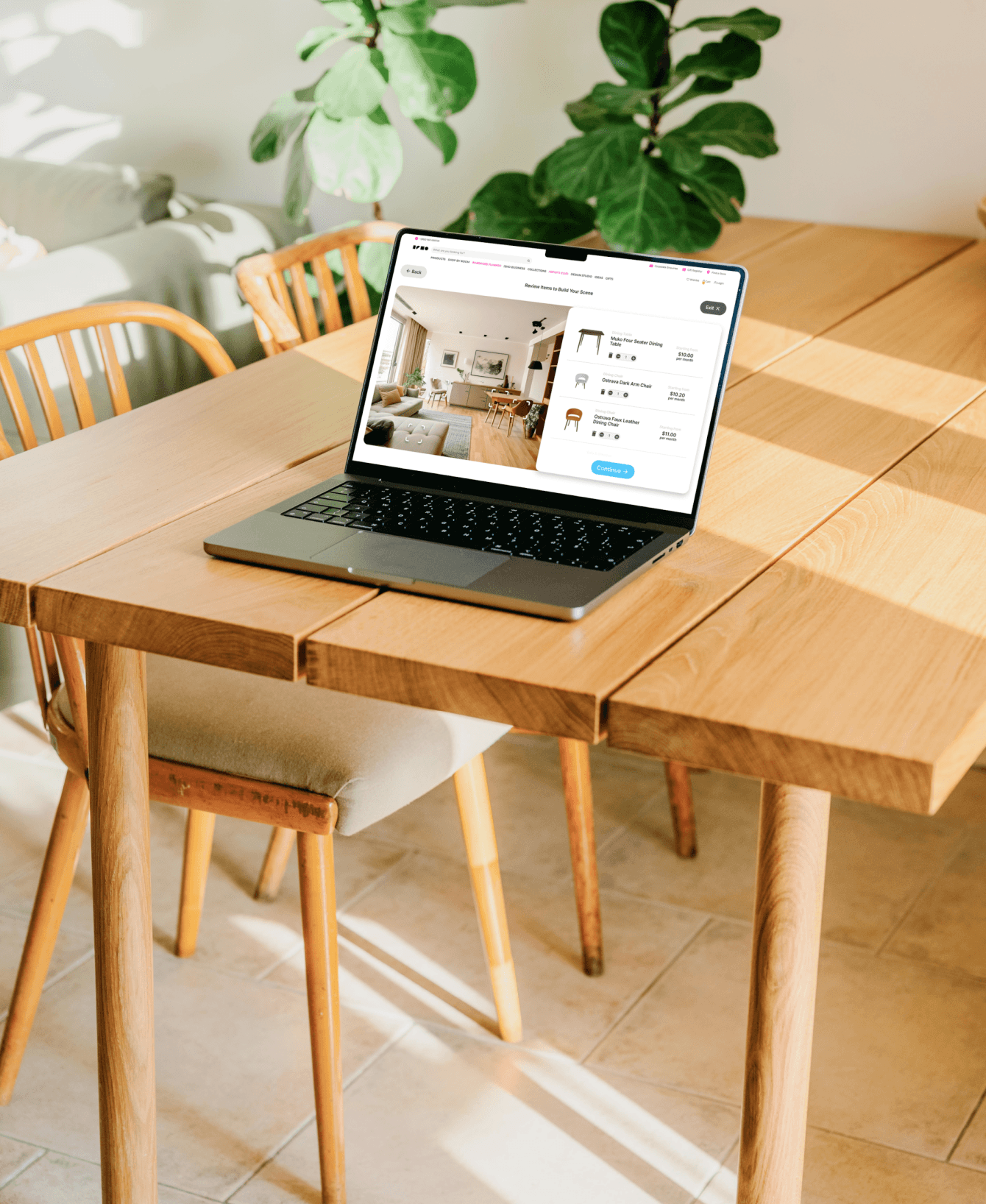
Developing a comprehensive furniture subscription service designed to resolve furniture waste and supply-demand mismatches in Boston.
Context
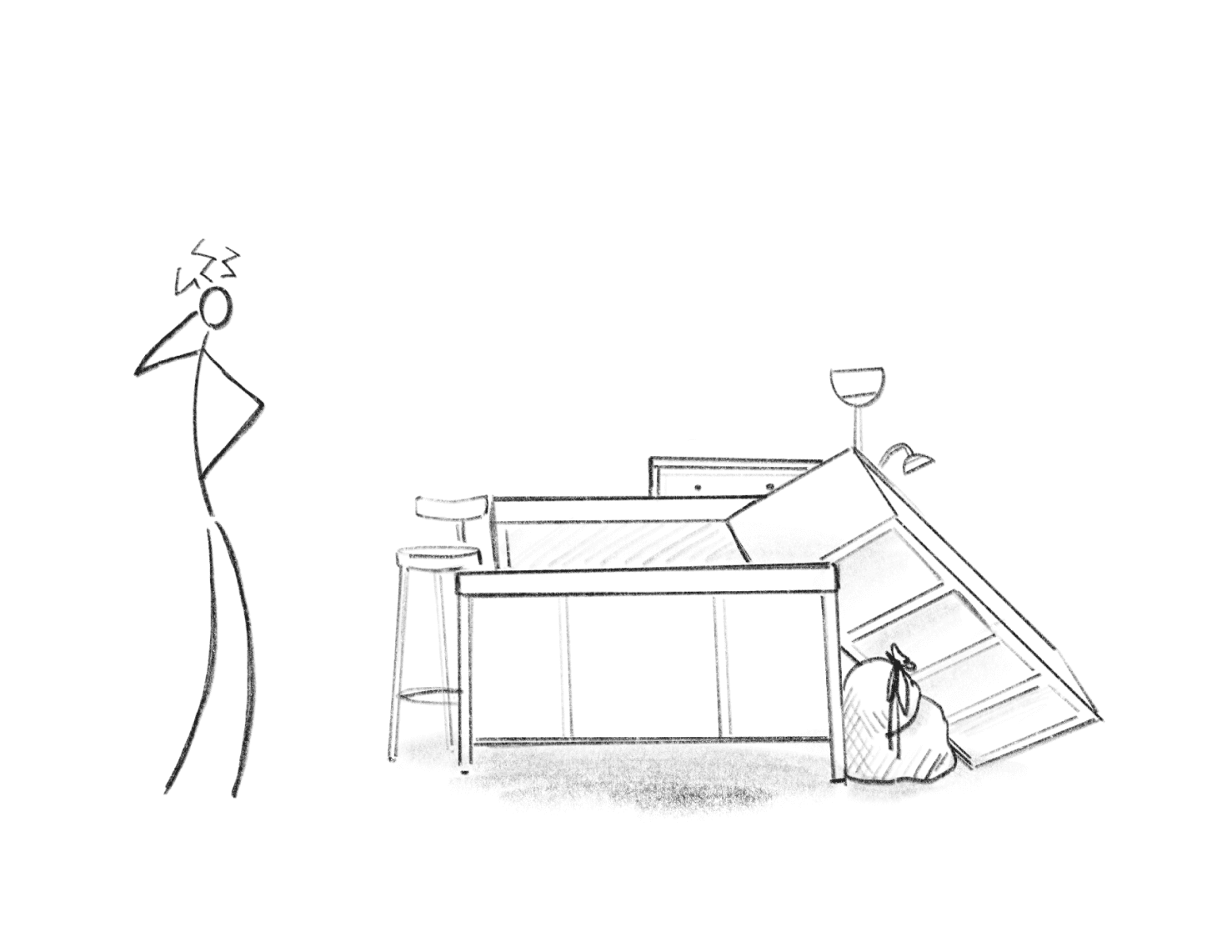
This project explores the issue of furniture waste in Boston, often a byproduct of the mismatch between supply and demand for secondhand furniture.
Through multiple interviews and in-depth research on Boston’s unique market, the project seeks to understand the behaviors, aspirations, and values of students—who, due to their transient lifestyles, inadvertently contribute to wasteful consumerism.
The proposed solution is a furniture subscription service that benefits both providers and consumers by offering a sustainable, economical, and convenient alternative to traditional furniture ownership.
Research


Allston Christmas and Challenges
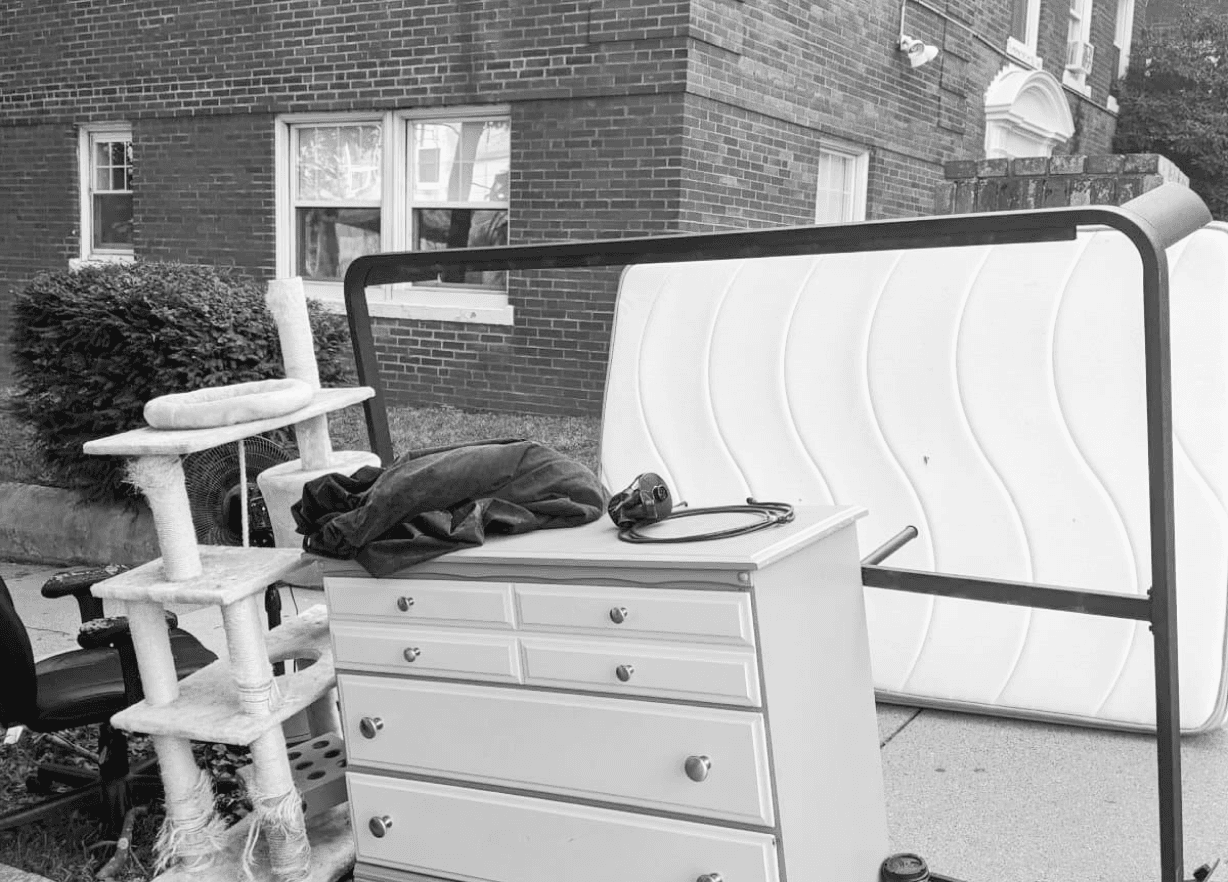
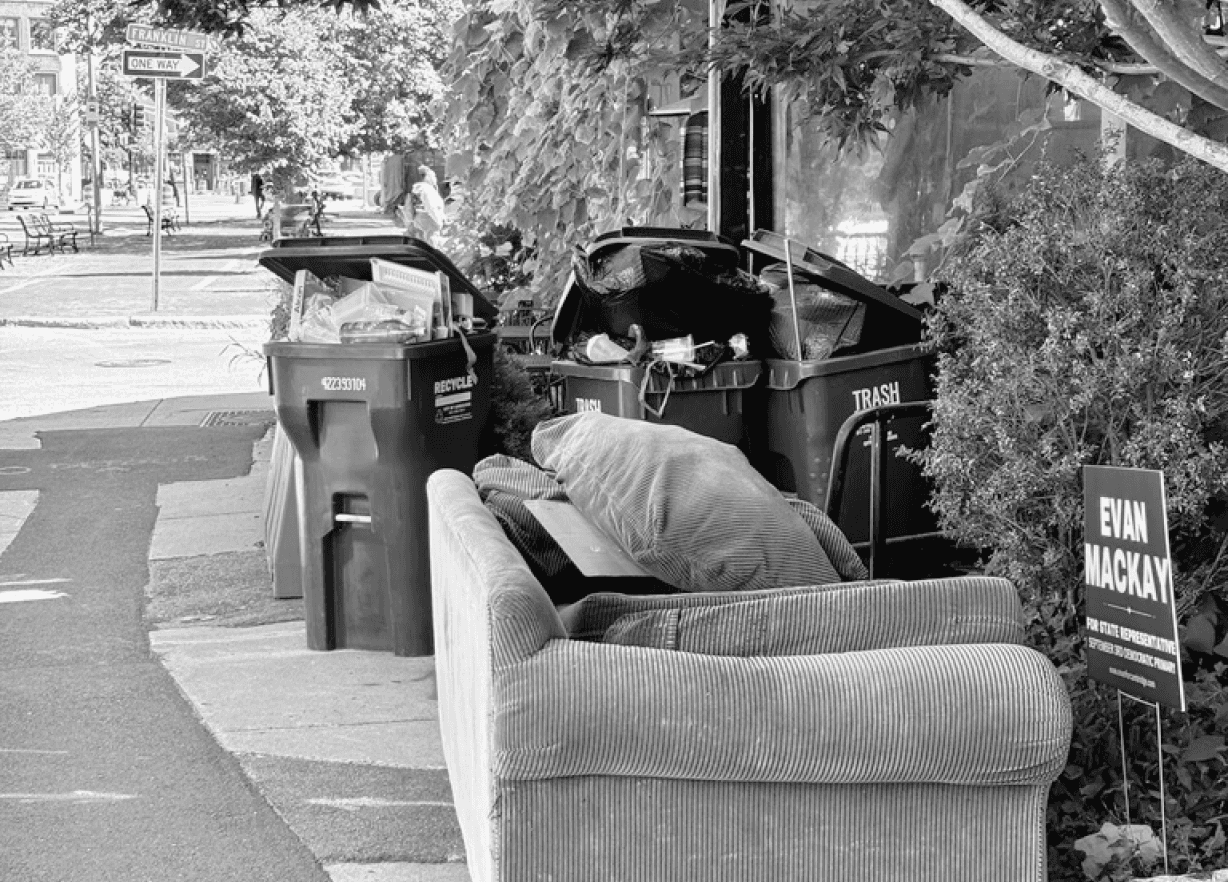
Boston has 44 higher education institutions, so there is a massive influx of students moving in and out of the city each year. This is especially evident in Allston, a neighborhood between Boston University, Boston College, and Harvard University.
Every late August, “Allston Christmas” unfolds—a phenomenon where discarded furniture floods the streets as students relocate, leading to an overwhelming amount of waste on sidewalks and curbs.
The mismatch in the second-hand furniture cycle is not limited to a specific part of Boston. According to a 2019 City of Boston report, 39% of Boston’s residents are between the ages of 18 and 34—18% higher than the national average. This transient demographic significantly contributes to the cycle of wasteful furniture consumption, highlighting the need for a more sustainable and efficient solution.
Interviews
To gain insights into this civic phenomenon and Boston’s furniture ecosystem, our team conducted five in-depth interviews with students living in the city. Three participants were new residents and other two participants had lived in Boston for over a year and had moved multiple times within the city.
The interviews were documented through video or audio recordings, notes, and stimulus-based discussions.
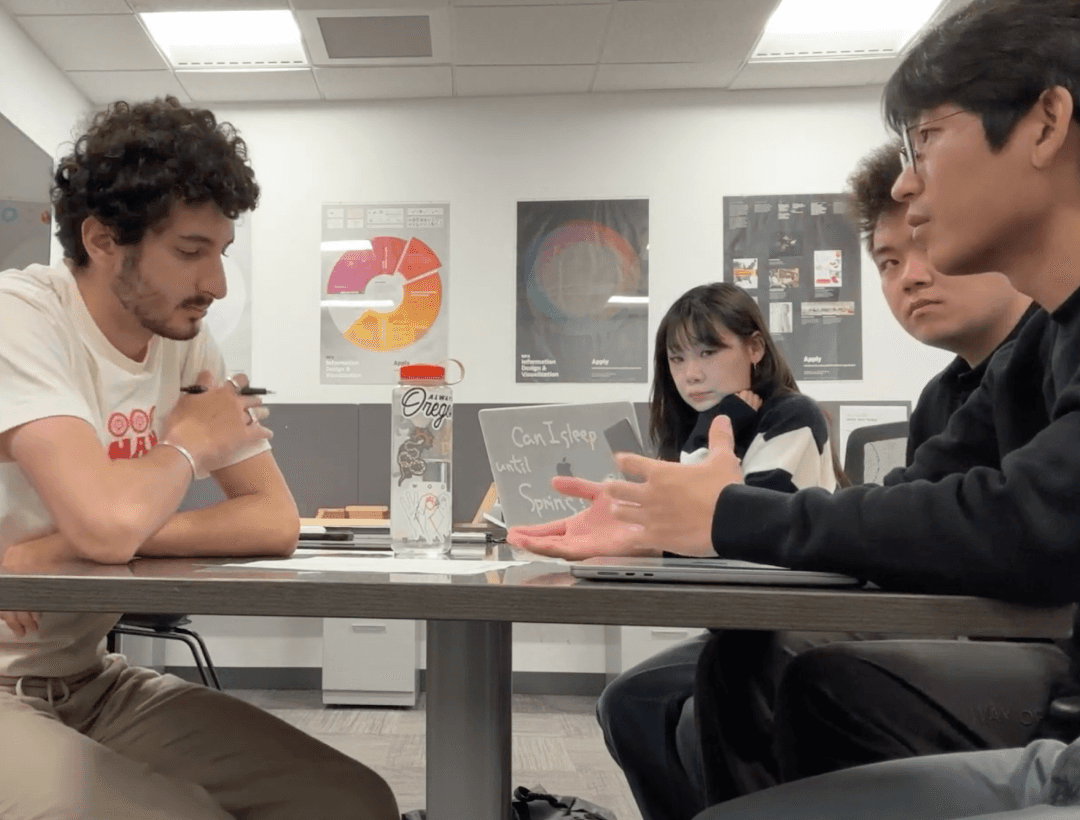
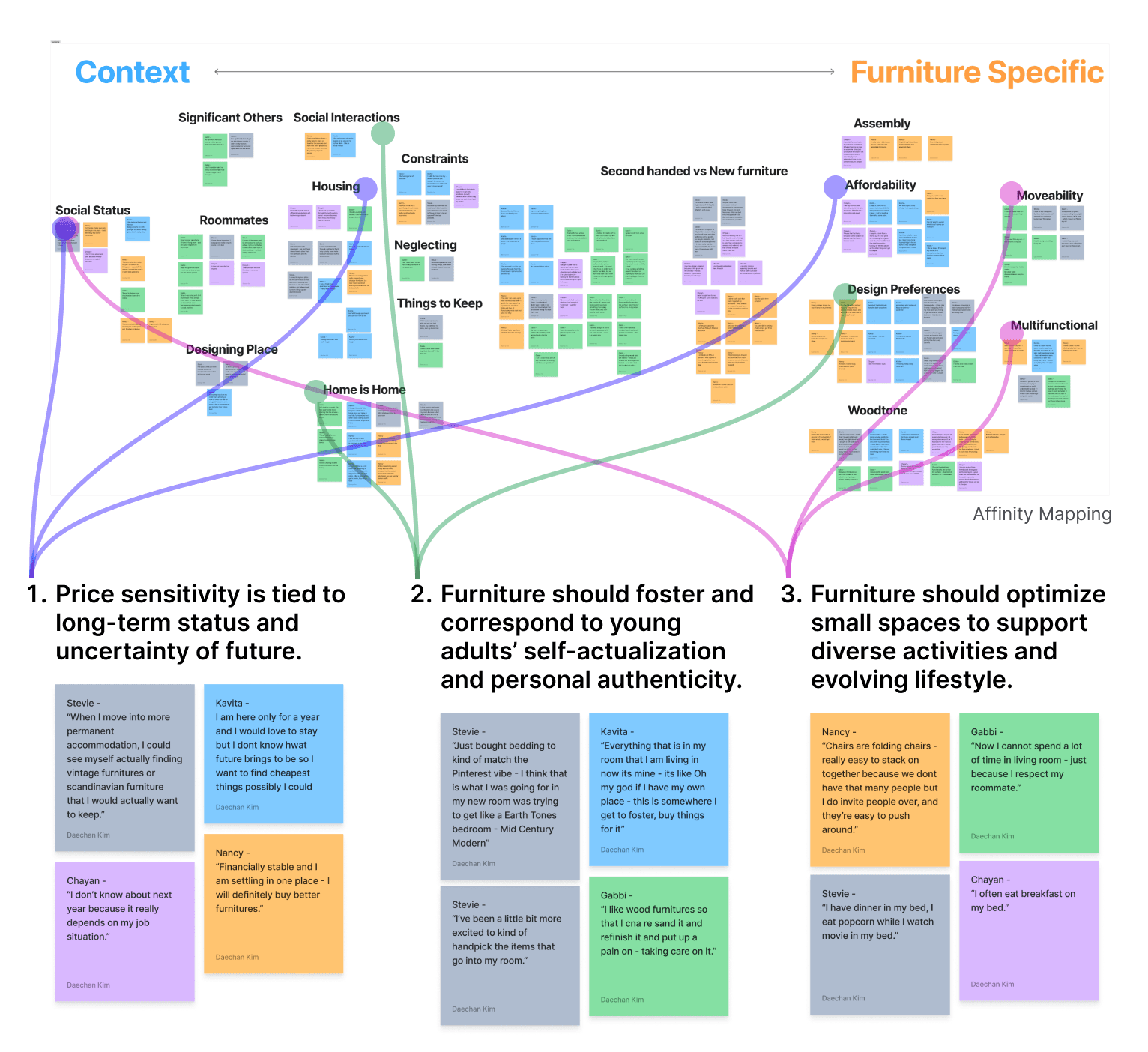
“(If I am) Financially stable and settle in one place - I will definitely buy better furniture.”
- Interviewer 01
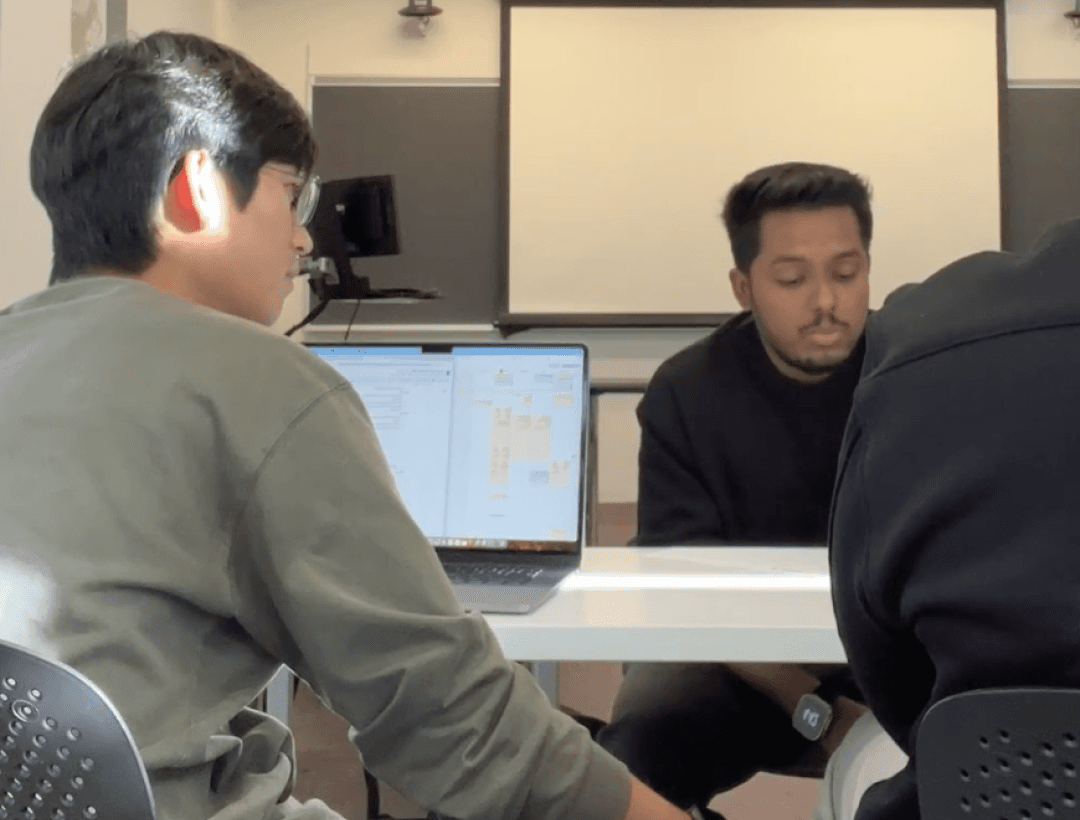
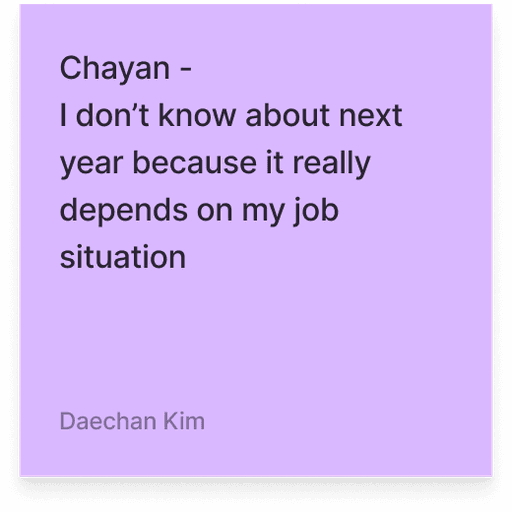
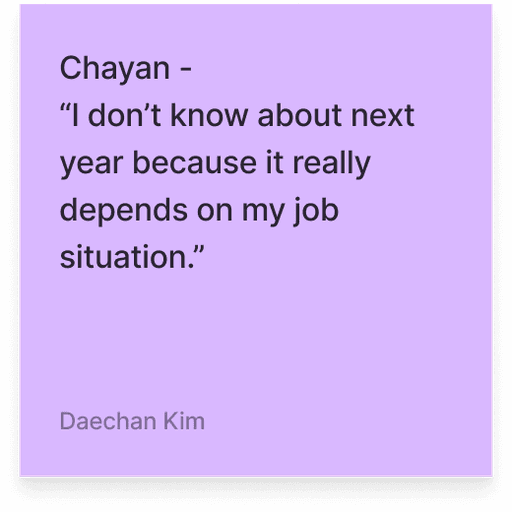
“I don’t know about next year because it really depends on my job situation.”
- Interviewer 02
Interview Stimulies
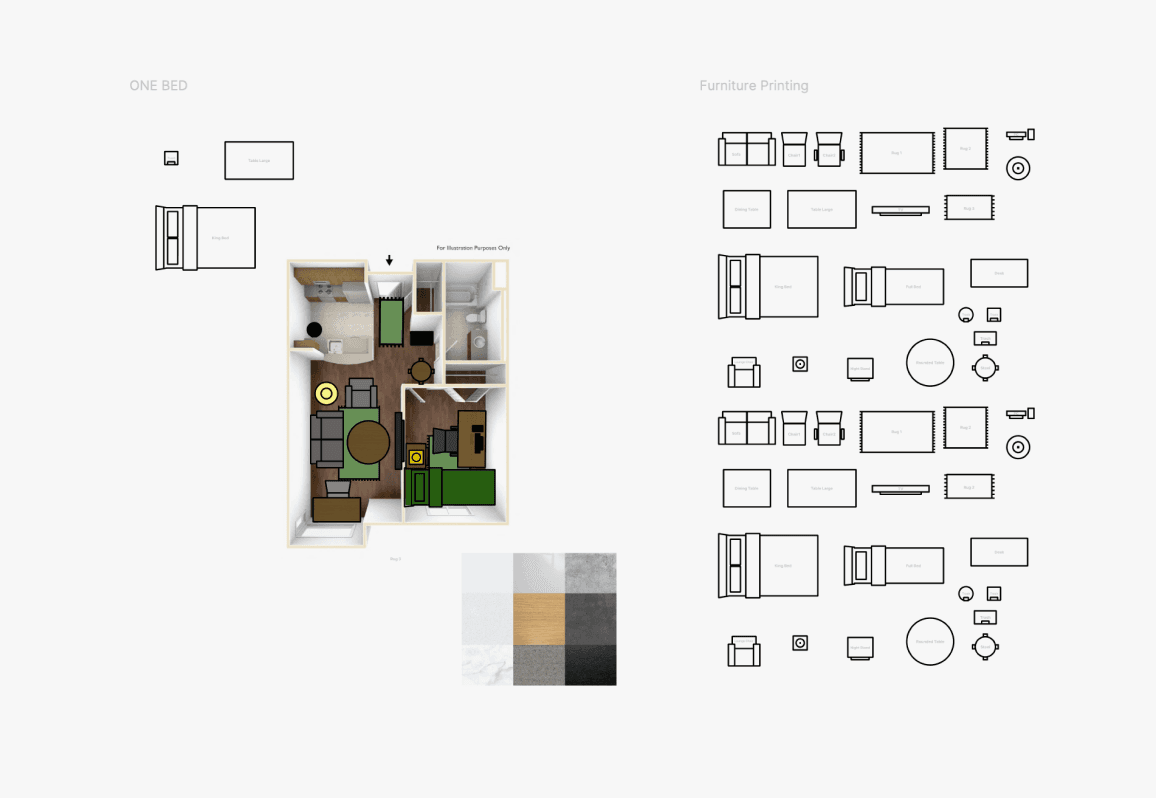
Think-Out-Loud (Floor Plan Exercise)
By having participants sketch and describe their living spaces, we explored their design preferences and decision-making process in organizing their homes.
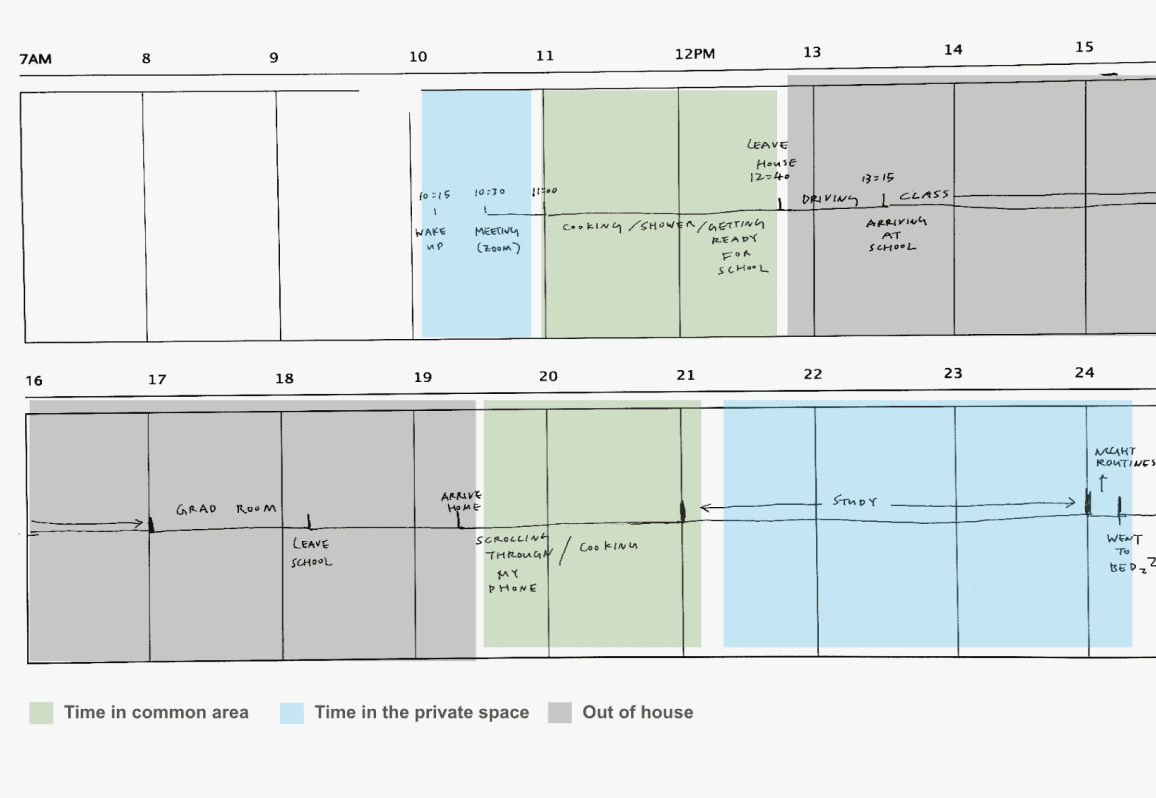
A Day in the Life
This exercise provided insights into how participants interact with their furniture daily.
Interview Analysis
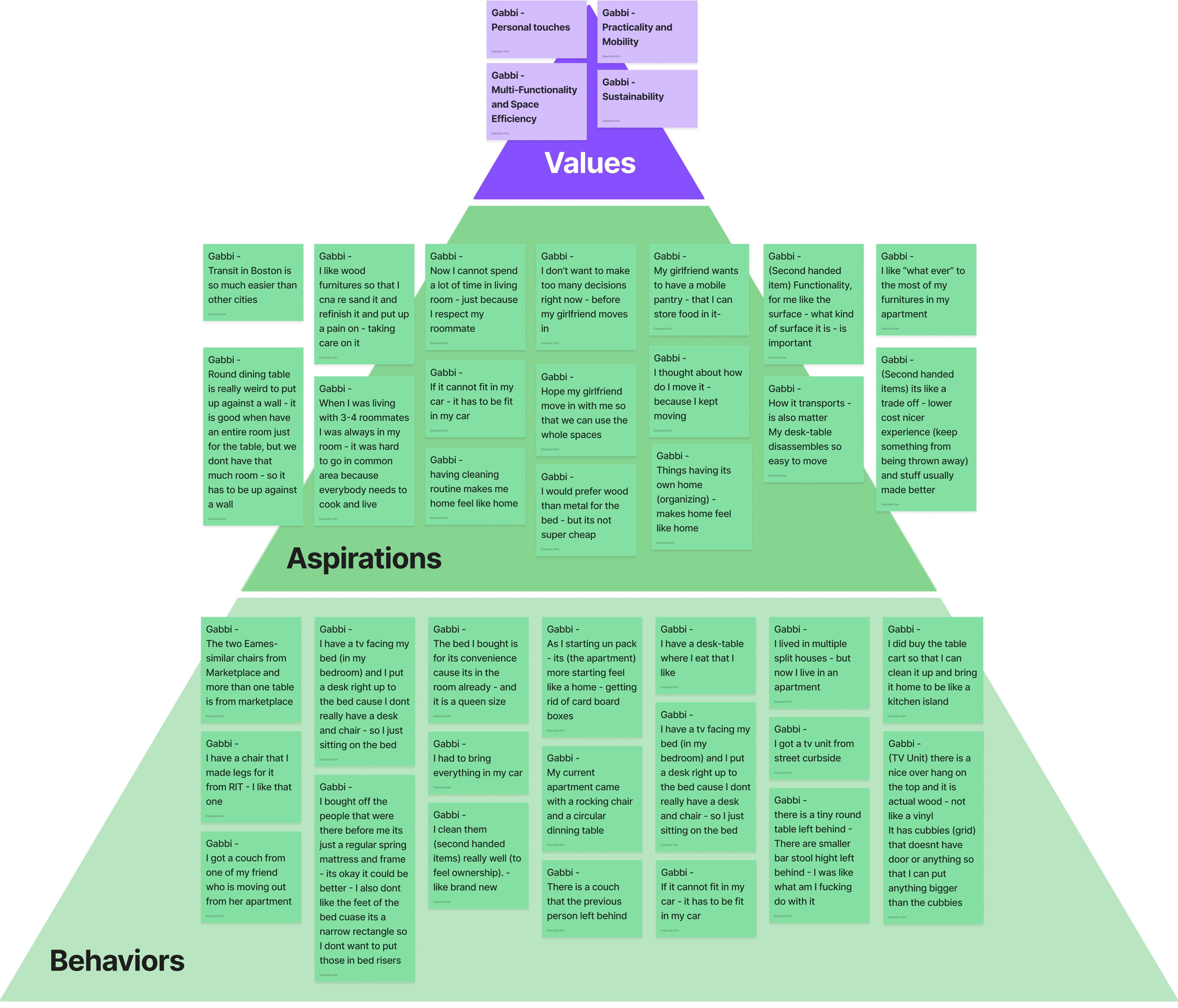
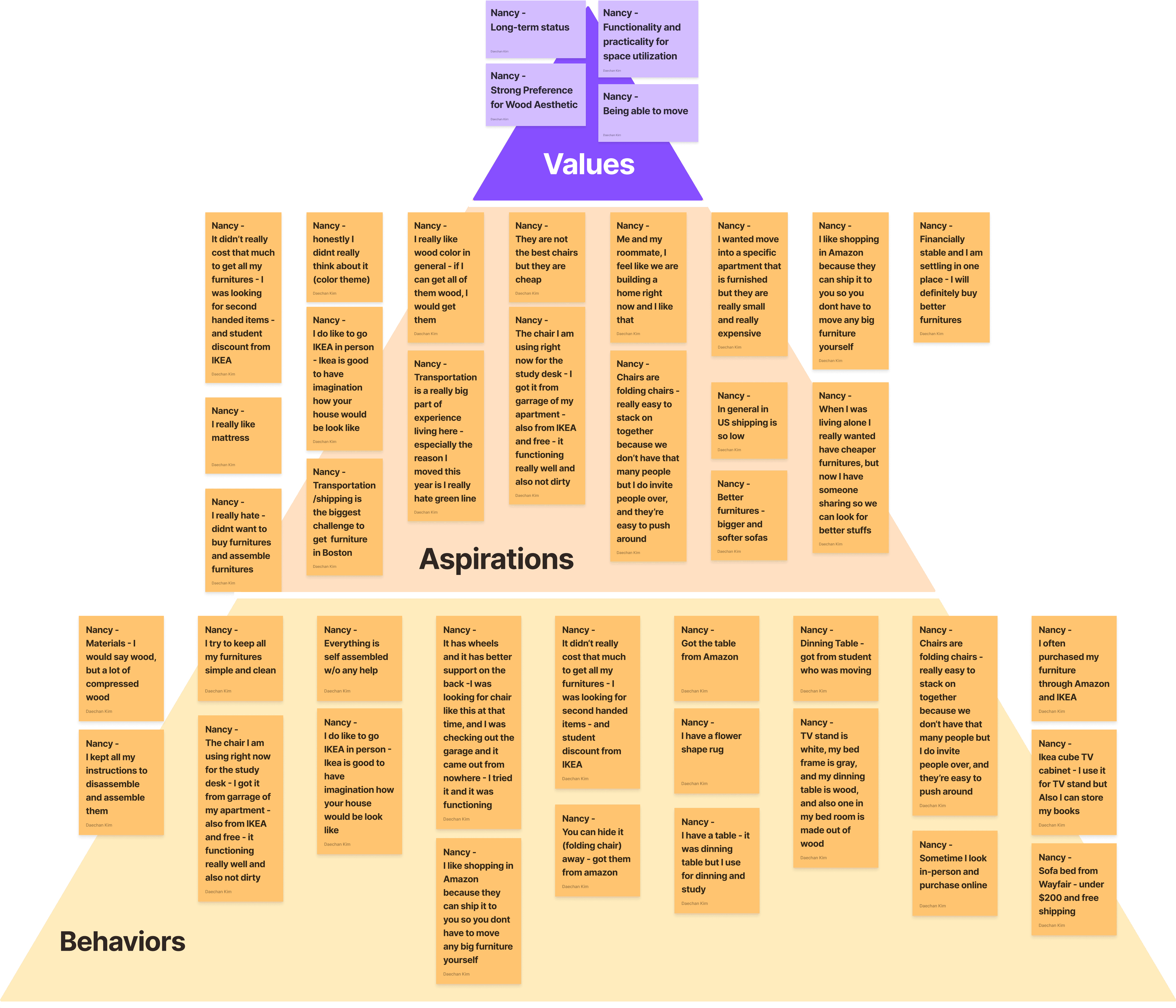
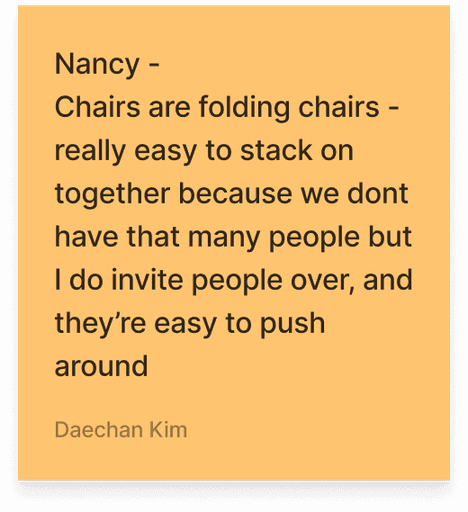
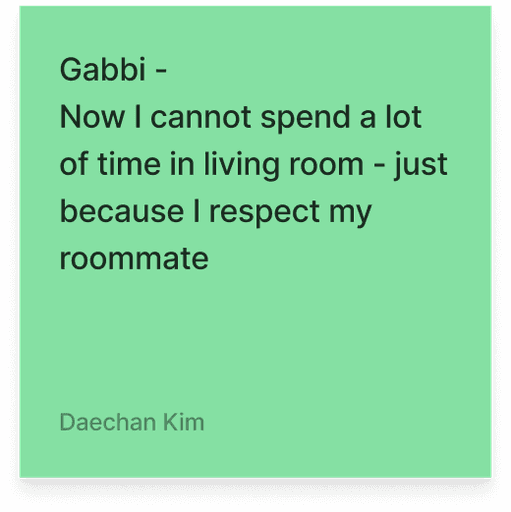
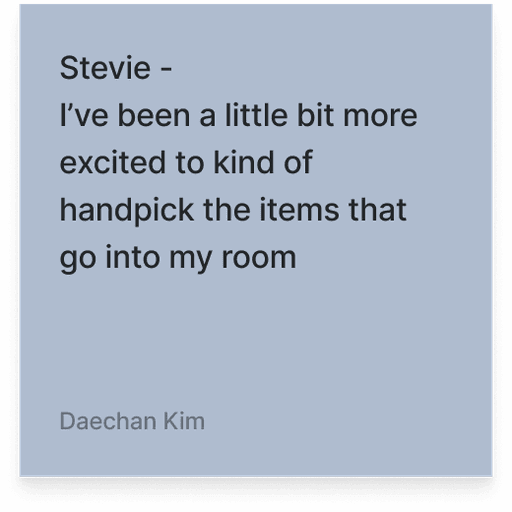
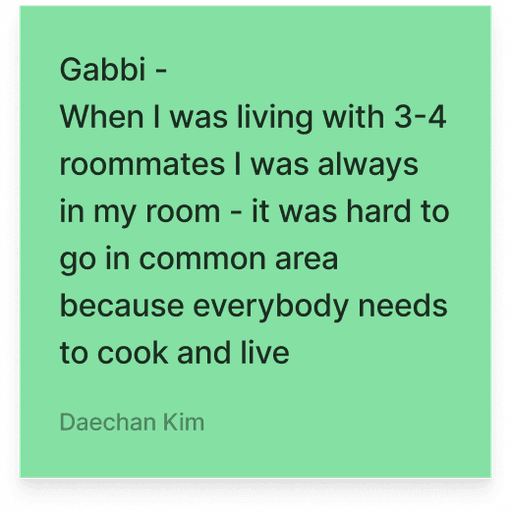
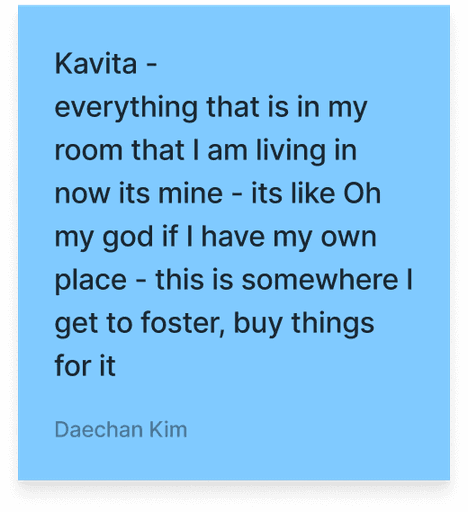
Every quote and observation was transcribed and analyzed to uncover individual behaviors and common aspirations.
This analysis allowed us to identify key values, market players, and preferences among our target demographic, laying the groundwork for our final concept.
Design
Turning Insights to Design
Based on the key findings and insights identified through the research, I have developed three service and product concepts that can serve the needs of the target users.
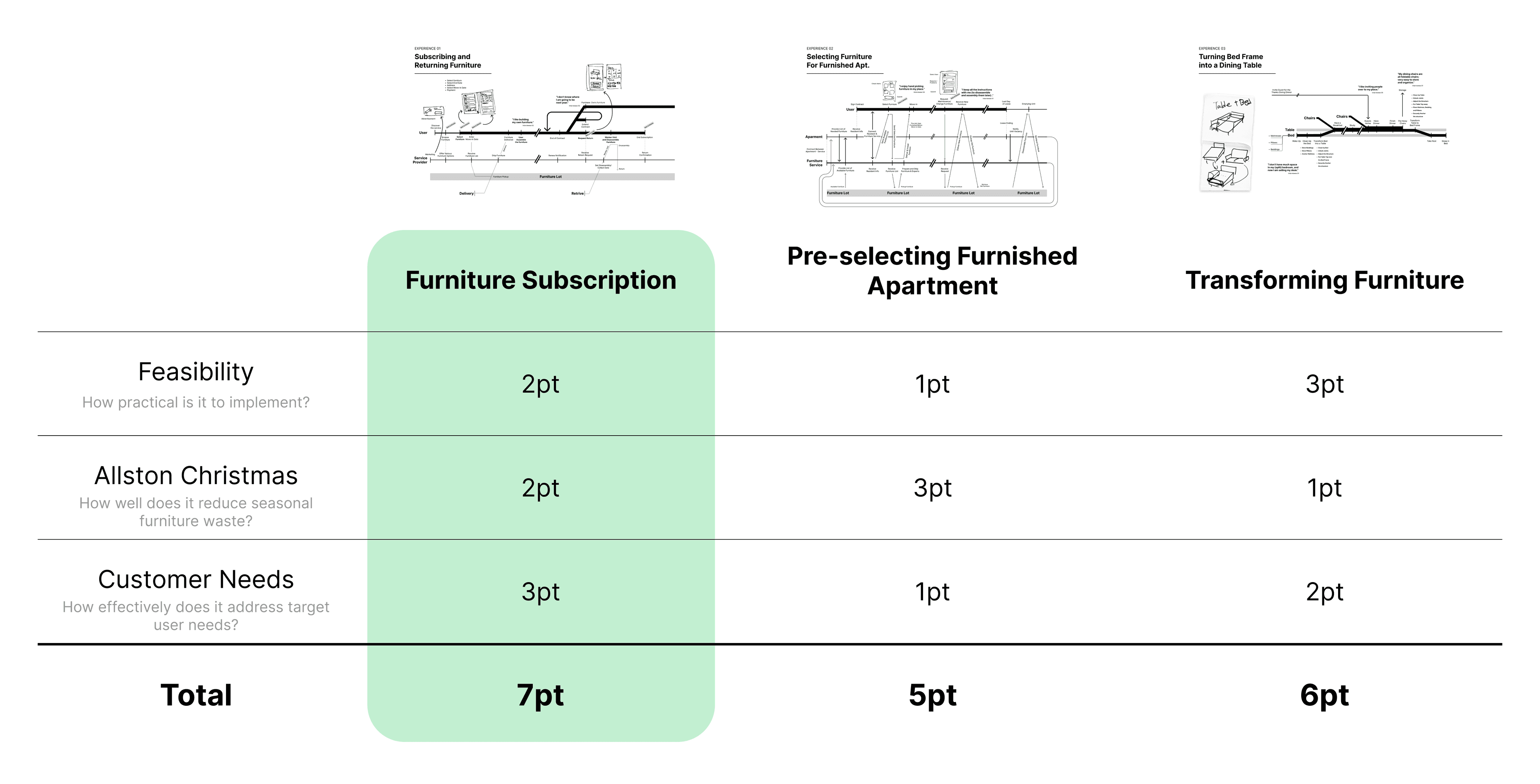
Concept 01 – Subscription-Based Furniture Model (Service Design)
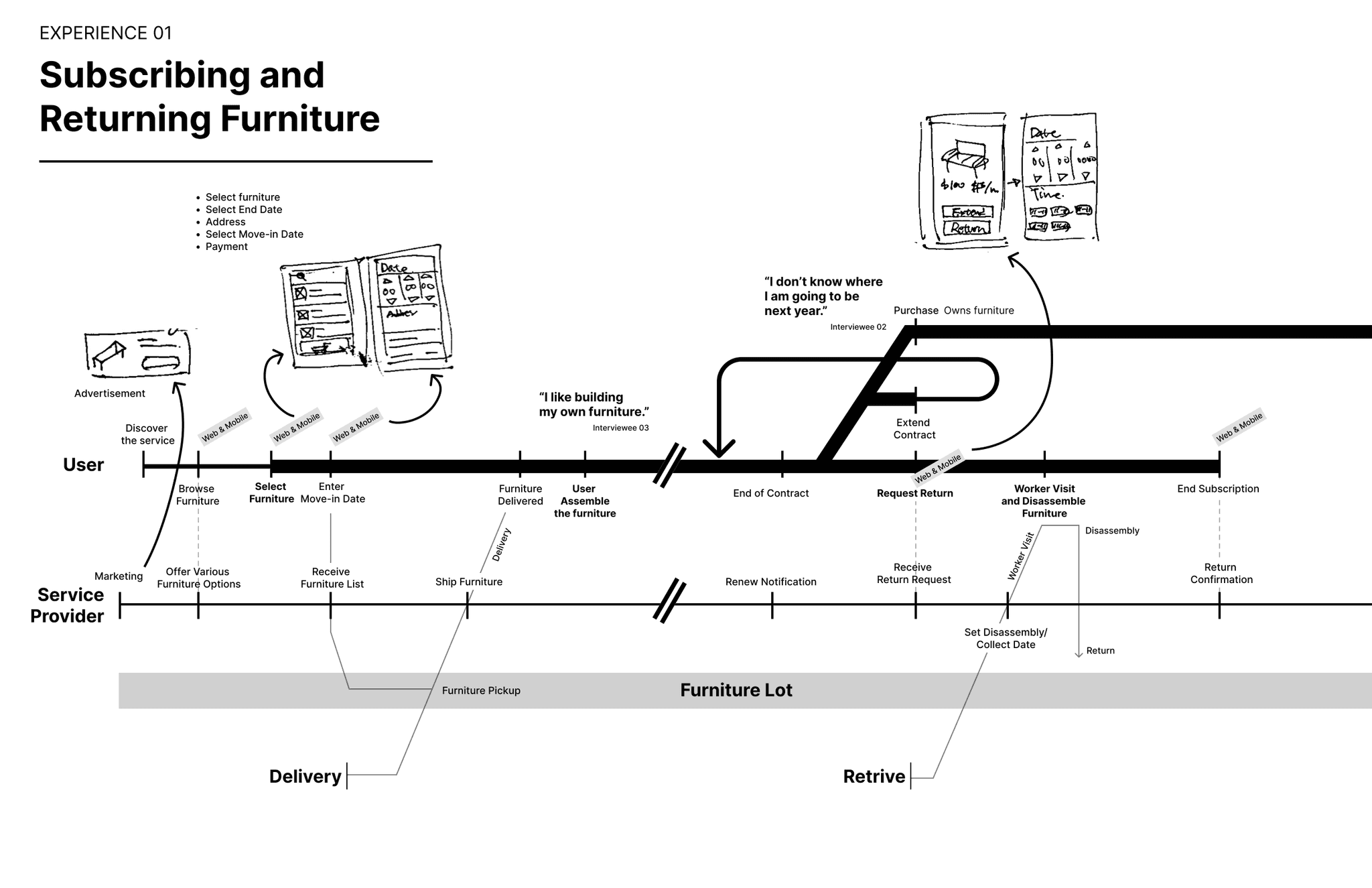
This concept introduces a subscription service where users can rent furniture with flexible terms, including the option to return items or purchase them outright at the end of the subscription.
It reduces the stress of large upfront costs, supports short-term living arrangements, and provides renters with the freedom to adapt as their future circumstances change. For businesses, this model opens access to markets previously limited by affordability.

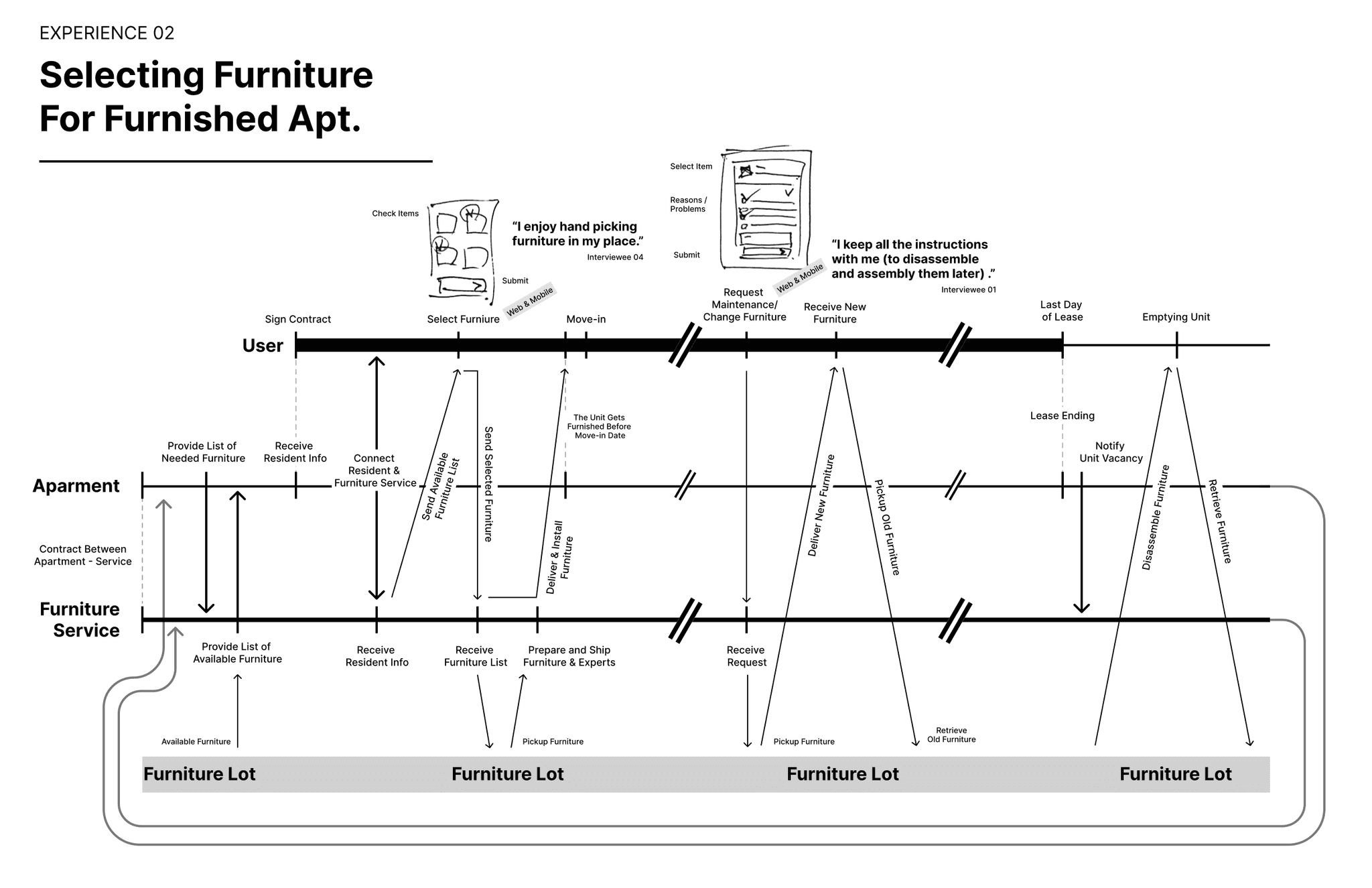
Concept 02 – Personalized Furniture Rental Service (Service Design)
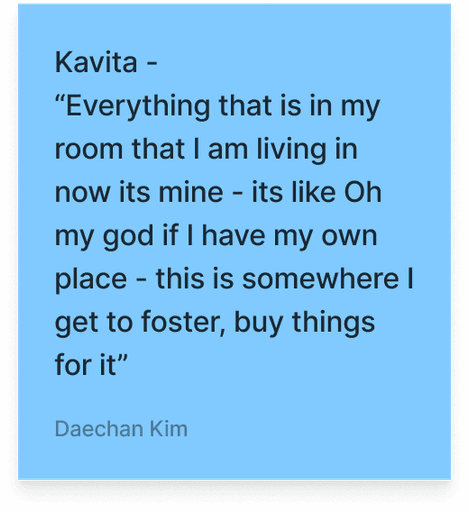
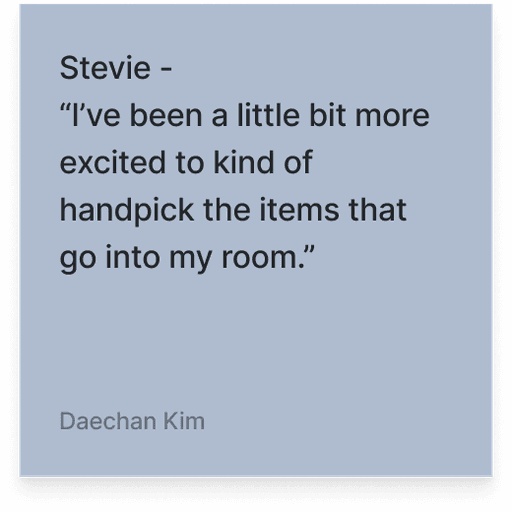
This concept connects renters, apartments, and furniture providers through a customizable rental service. Instead of being limited to generic furnished apartments, residents can handpick furniture pieces that match their needs and preferences, paying a monthly fee that reflects their selections, creating a lock-in effect that benefits property owners by increasing tenant retention.
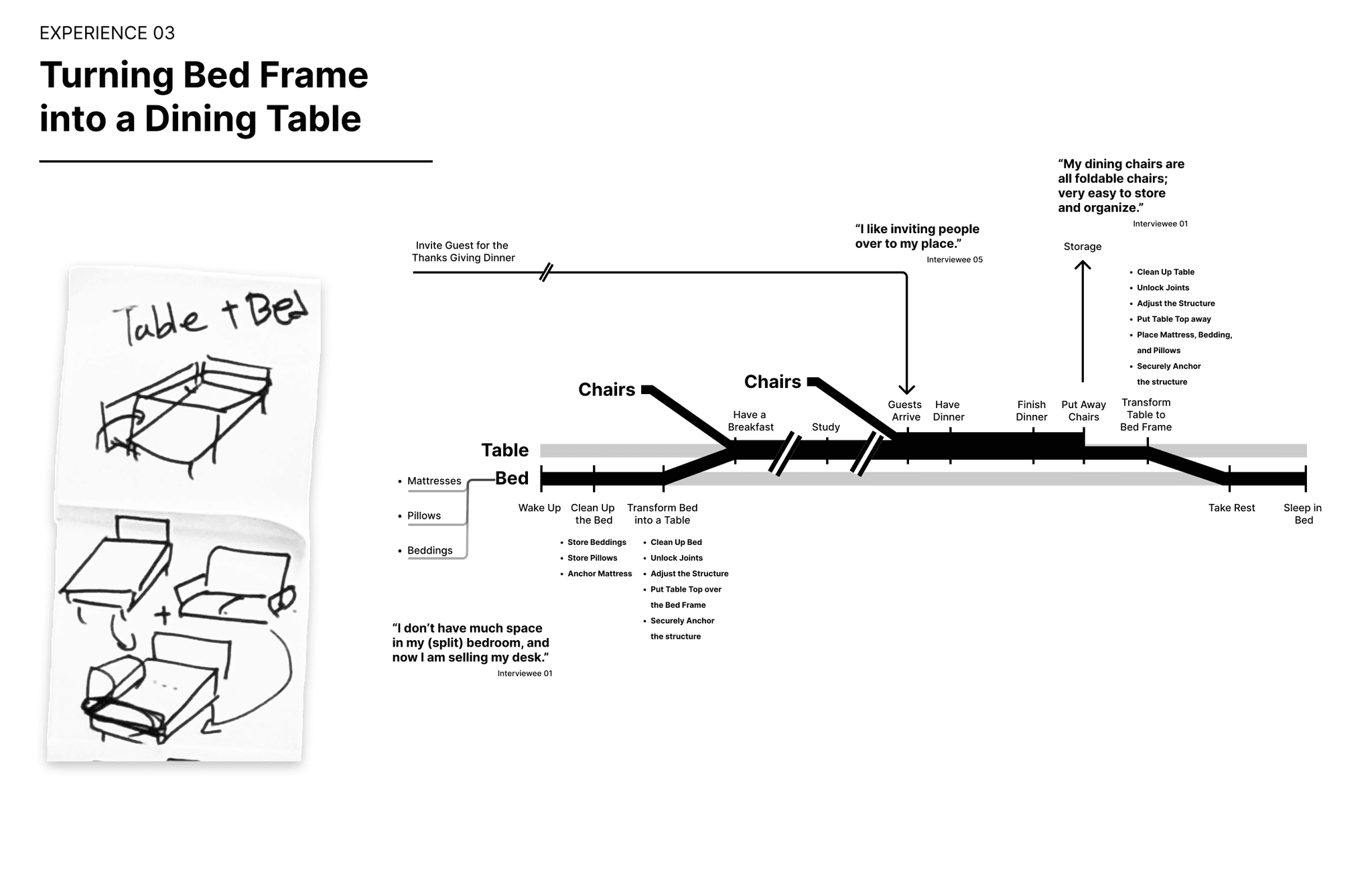
Concept 03 – Convertible Bed and Dining Table (Product Design)
This product concept addresses the space constraints common in urban apartments by combining two essential yet space-consuming pieces of furniture: a bed and a dining table.
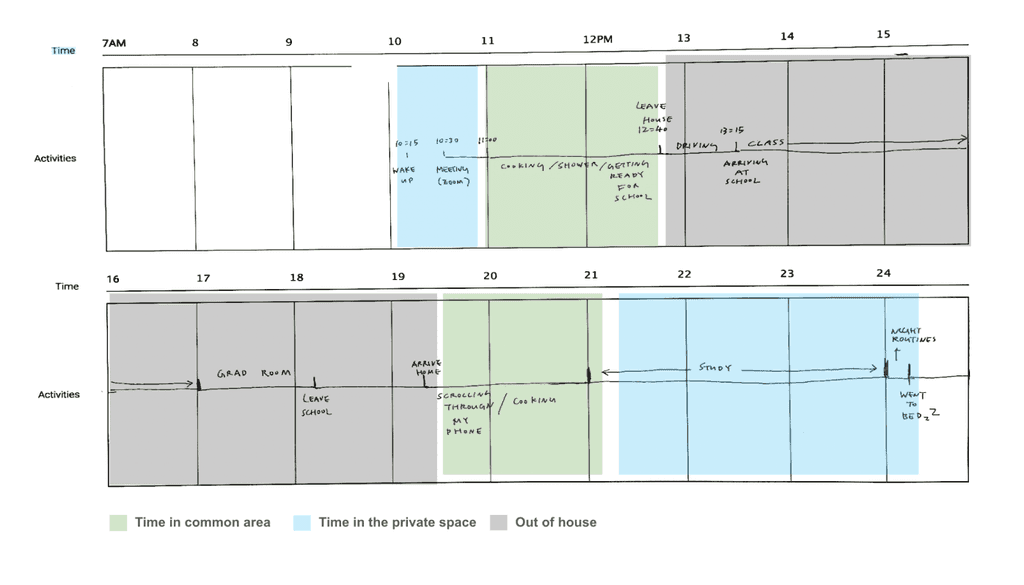
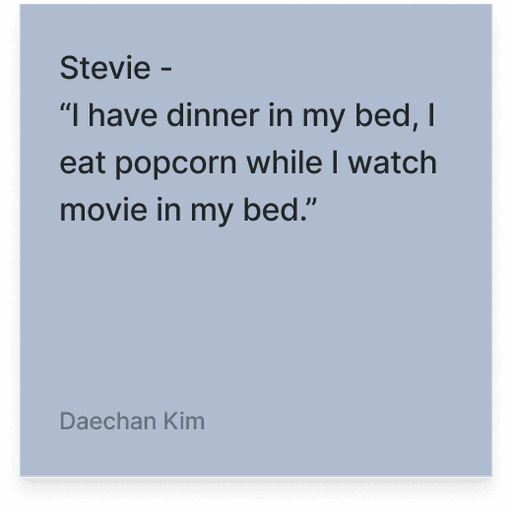
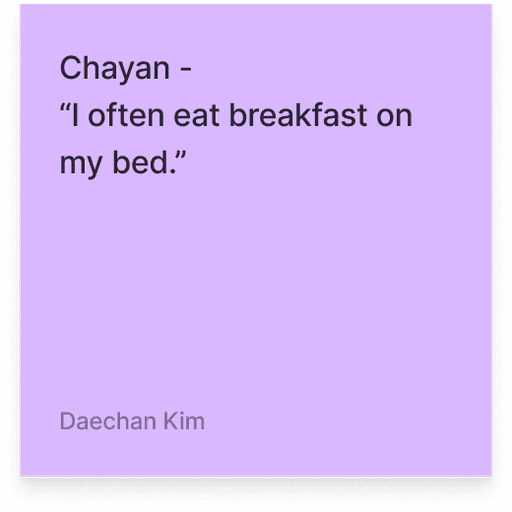
The idea emerged from the “A Day in the Life” exercise, where residents revealed that limited space often forced them to eat meals in bed rather than at a dining table. A convertible solution provides both comfort and functionality while freeing up valuable square footage.
Service Design Iterations
Among the three initial concepts, I identified the Subscription-Based Furniture Service as the most feasible and compelling. This model gives the service provider full control and authority over operations, while expanding into a market space that conventional furniture businesses have yet to explore. Importantly, it also addresses the seasonal furniture waste problem that is particularly visible in the Boston area.
To further develop this concept, I created three imaginative furniture brands to explore different customer approaches. Each brand reflects a distinct positioning in terms of style, product quality, and price range, targeting specific audience segments identified through secondary research on the Boston furniture market.
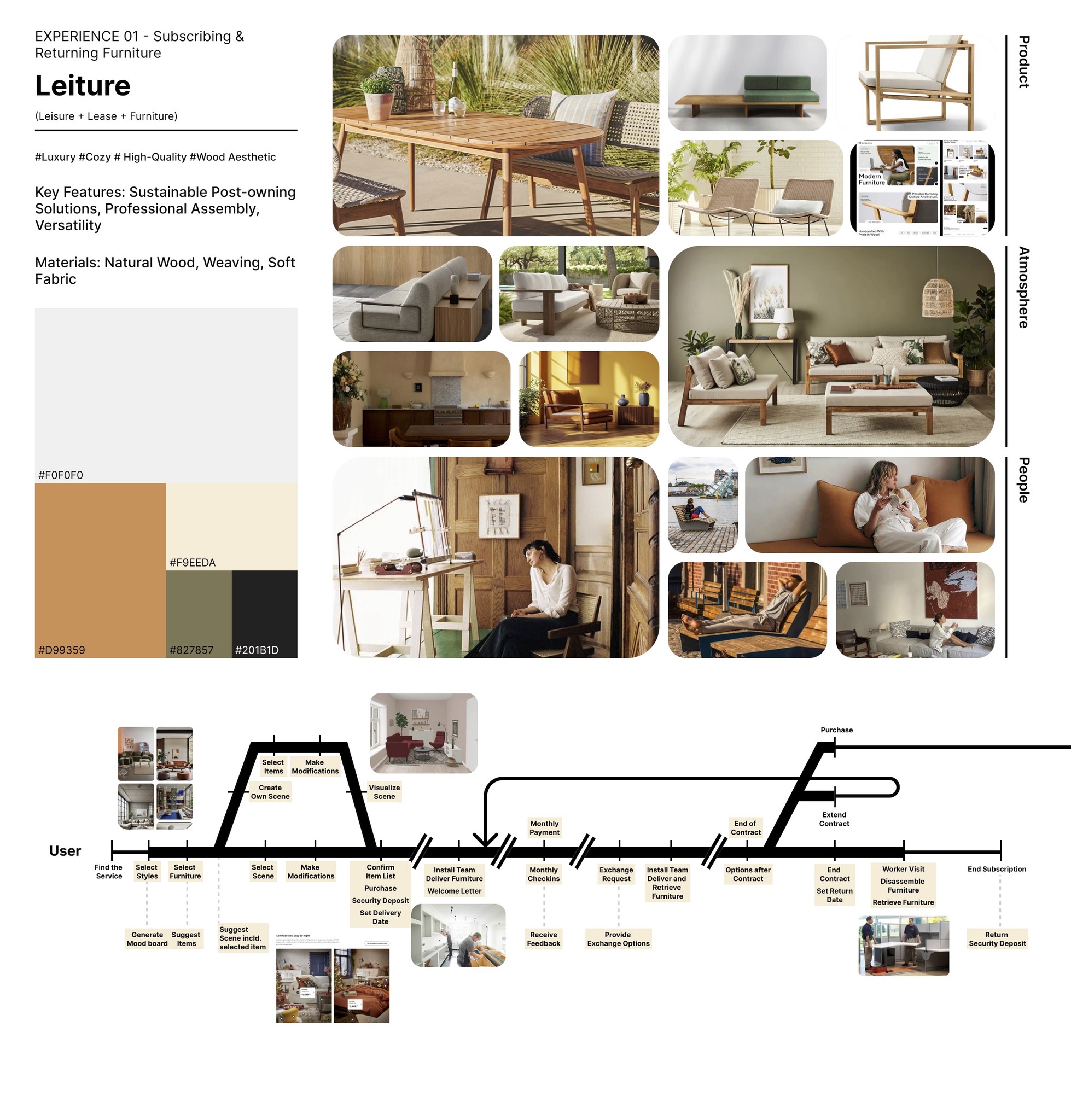
Concept 01 - Leiture
#Luxury #Cozy # High-Quality #Wood Aesthetic
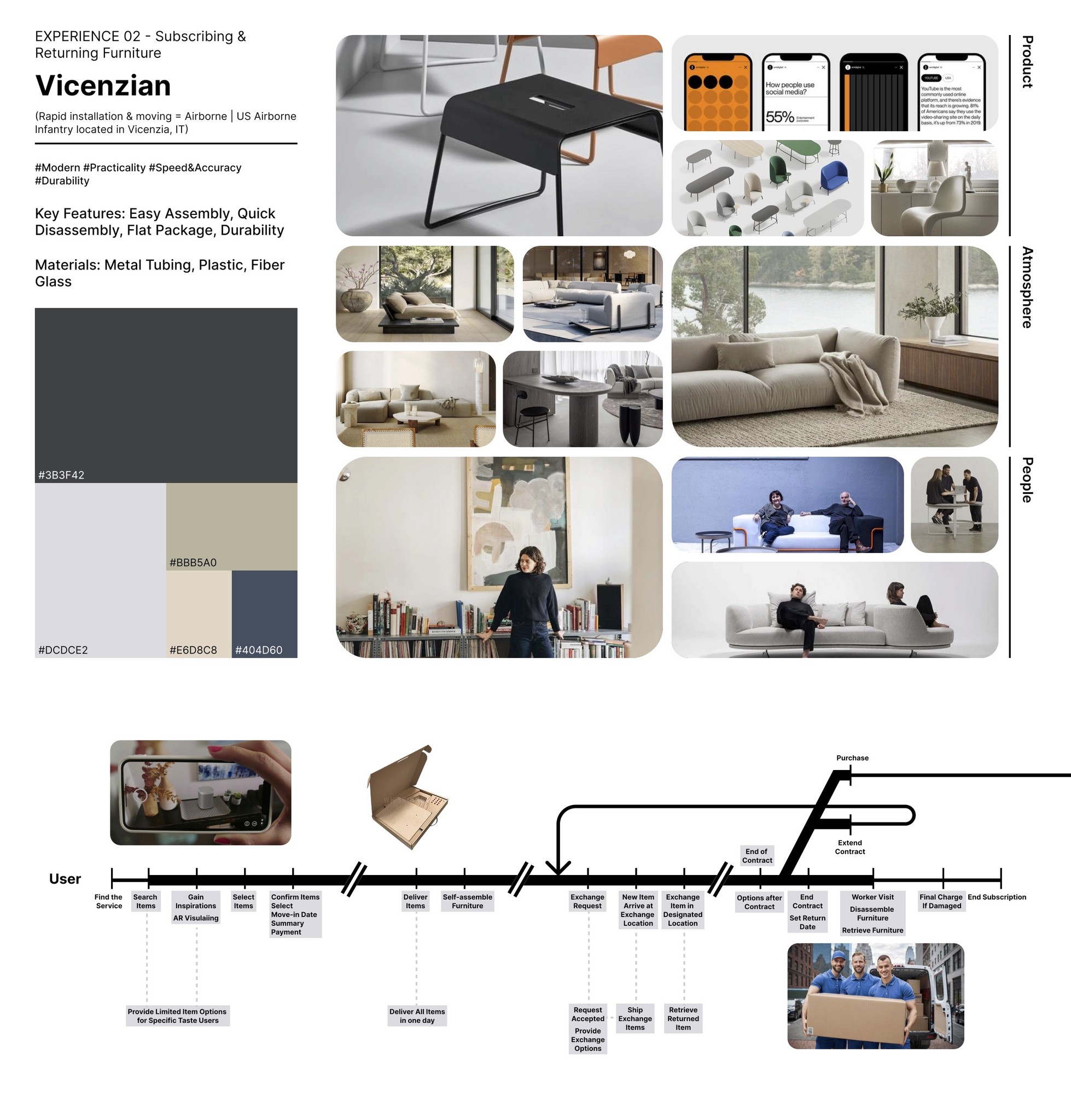
Concept 02 - Vicenzian
#Modern #Practicality #Durability
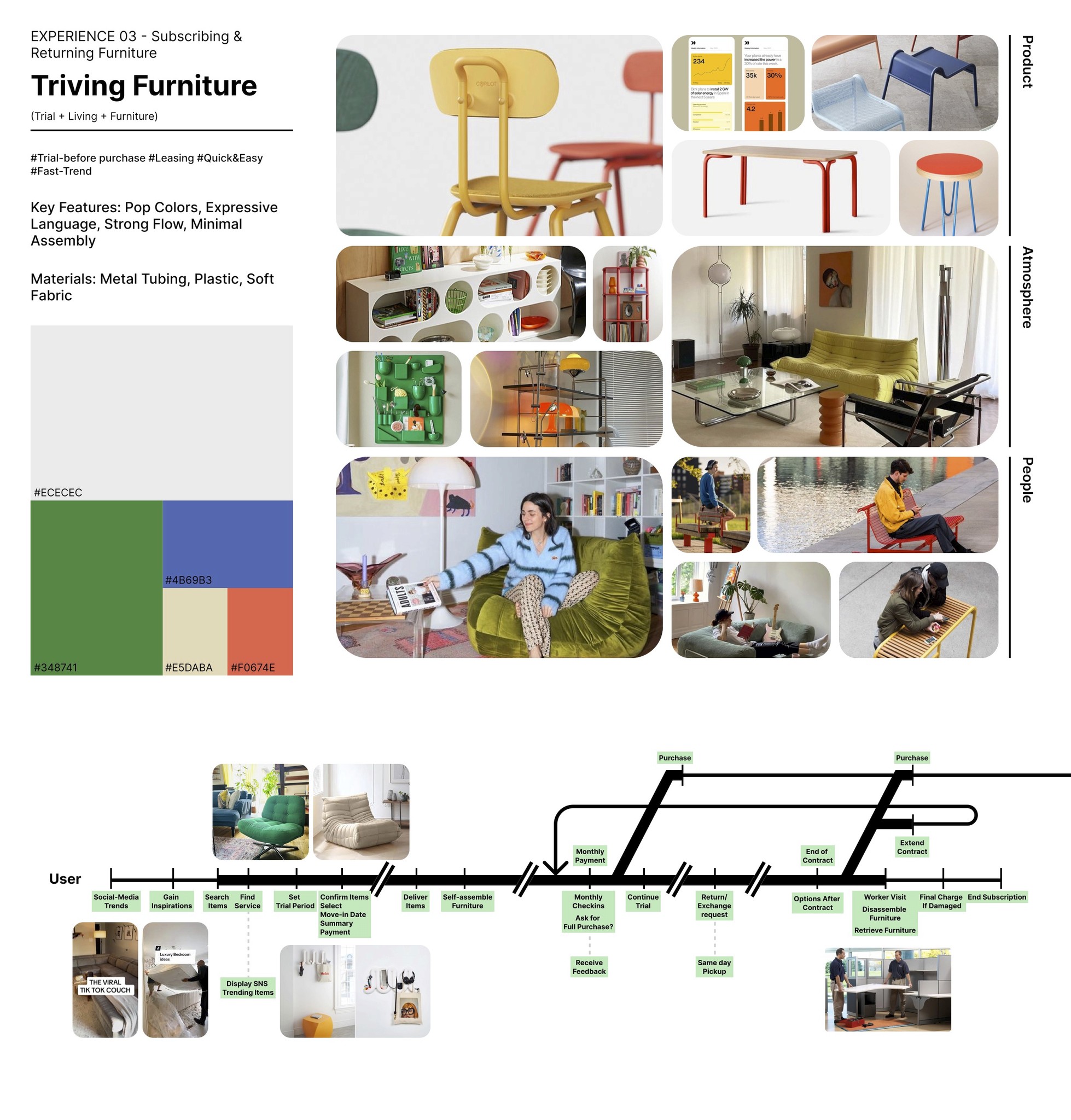
Concept 03 - Triving Furniture
#Fast-trend #Trial-before-buy #Leasing #Trendy
Developing the Final Concept
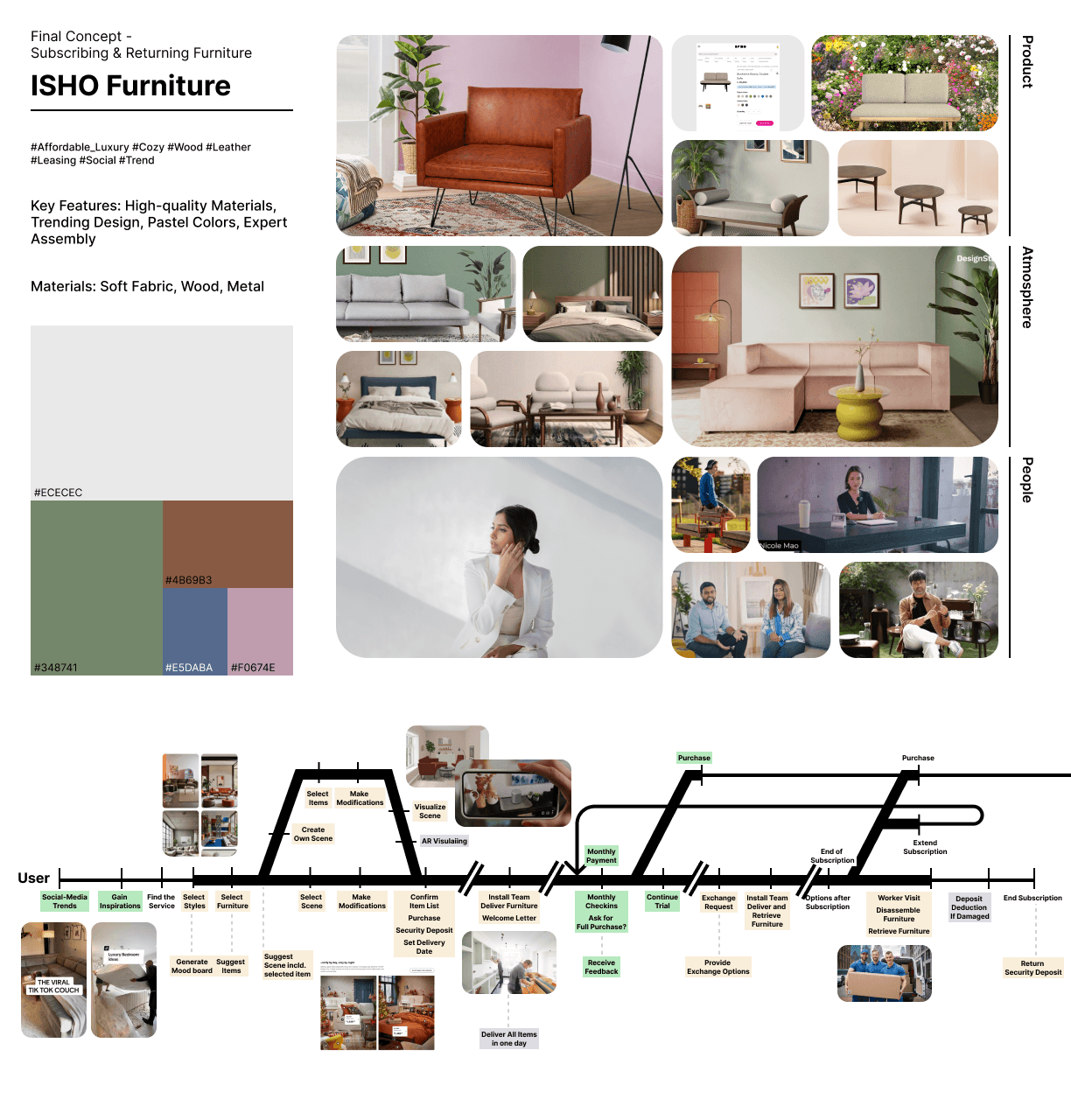
The three imaginative brands provided a framework to explore user touchpoints and service experiences in greater depth. These explorations became the foundation for shaping the final concept.
The final service concept was developed in collaboration with the project sponsor, ISHO Furniture (Bangladesh). Drawing from ISHO’s existing product lines and brand identity, I created a color palette and moodboard to align the service direction with their established aesthetic.
Comprehensive research into ISHO Furniture—combined with insights from the imaginative brand exercise—directly informed the evolution of the final service concept.
Final Design Concept
ISHO CloudLiving
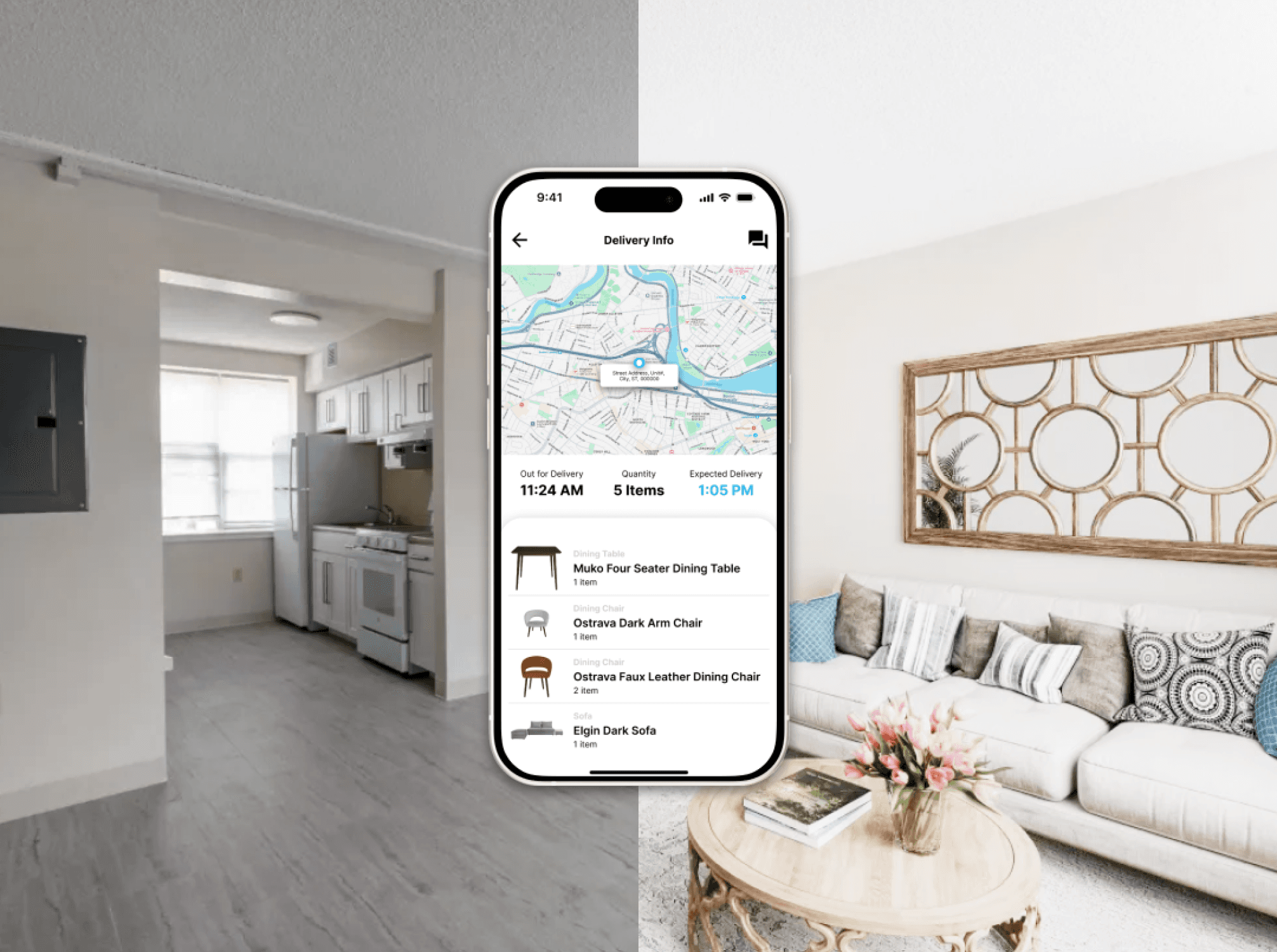
The final solution is a subscription service that offers both convenience and financial flexibility. It allows customers to access quality furniture without the commitment of ownership, while service providers gain an effective channel to reach potential clients with a sustainable options for repurposing used furniture, appealing to a diverse range of users.
Service Plan &
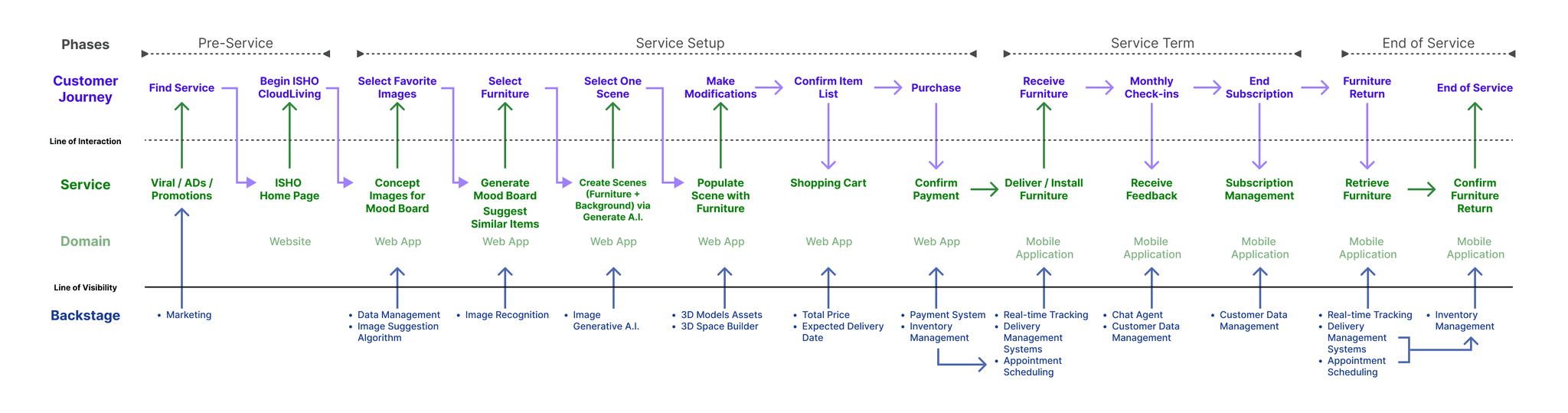
Service Blueprint
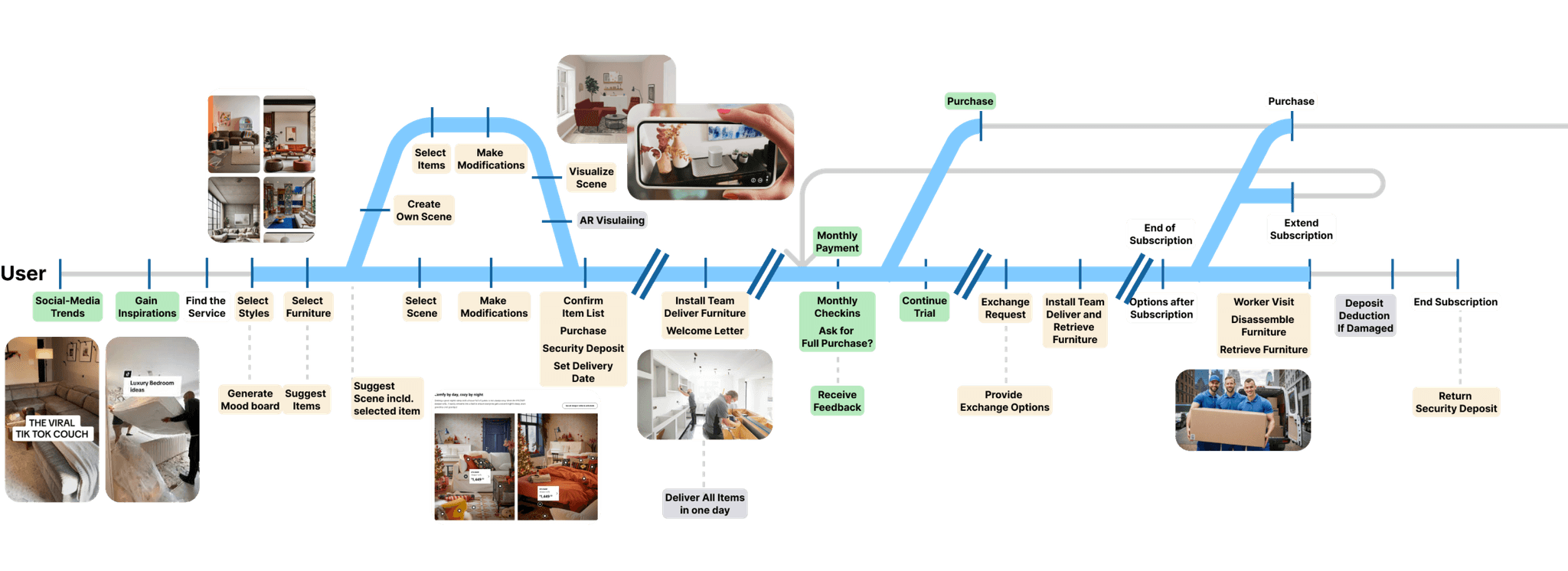
The service plan maps out the entire customer journey by identifying key interactions and integrating multiple layers of logistics.
Developed from our primary research findings and a range of business concepts, the plan envisions the complete experience a customer will have when engaging with the service.
Selecting Furniture That Matches Taste
For many young adults moving out for the first time, designing and decorating their own space is an important step toward self-actualization. However, interviews revealed common struggles such as, limited budgets, lack of design knowledge, and difficulty creating a cohesive visual concept.
To address this, the service leverages artificial intelligence to understand individual preferences and suggest furniture pieces that align with each customer’s aspirations and needs. Instead of requiring users to know exactly what they want, the system flips the conventional furniture shopping experience—helping them discover styles and products that reflect their taste.
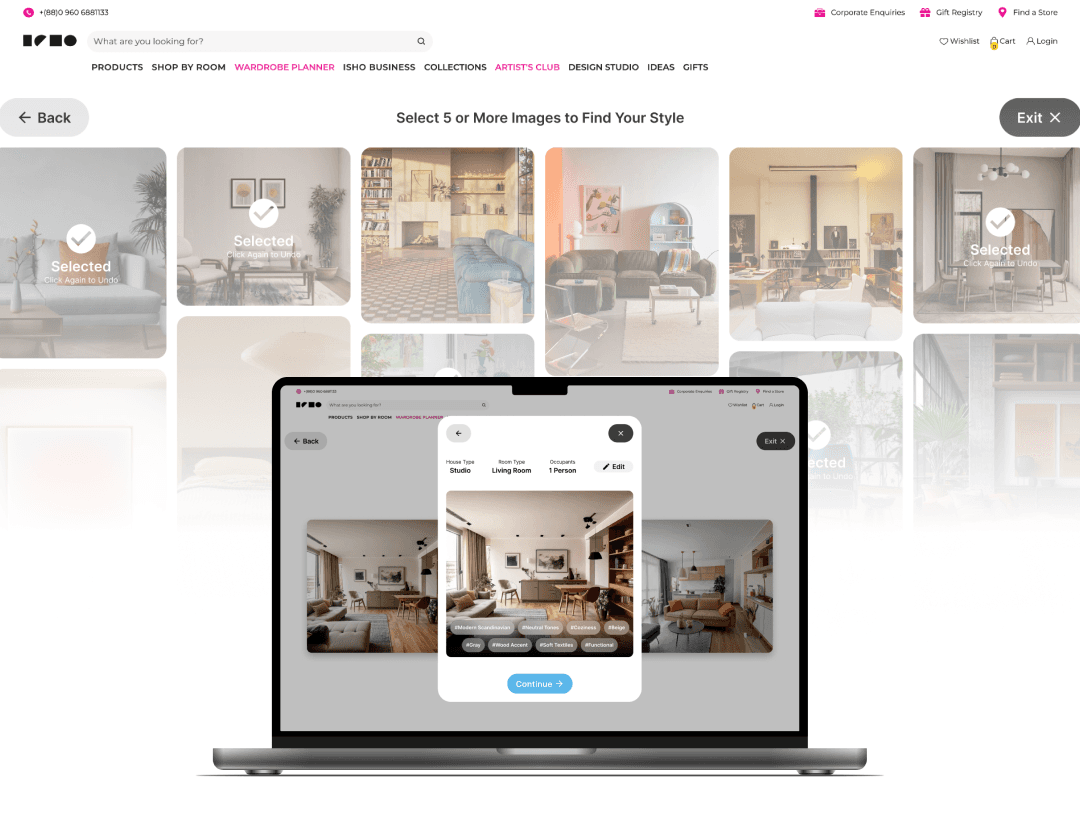
Users select inspiration images to train the system on their aesthetic preferences, generating mood-based visuals that reflect their vibe.
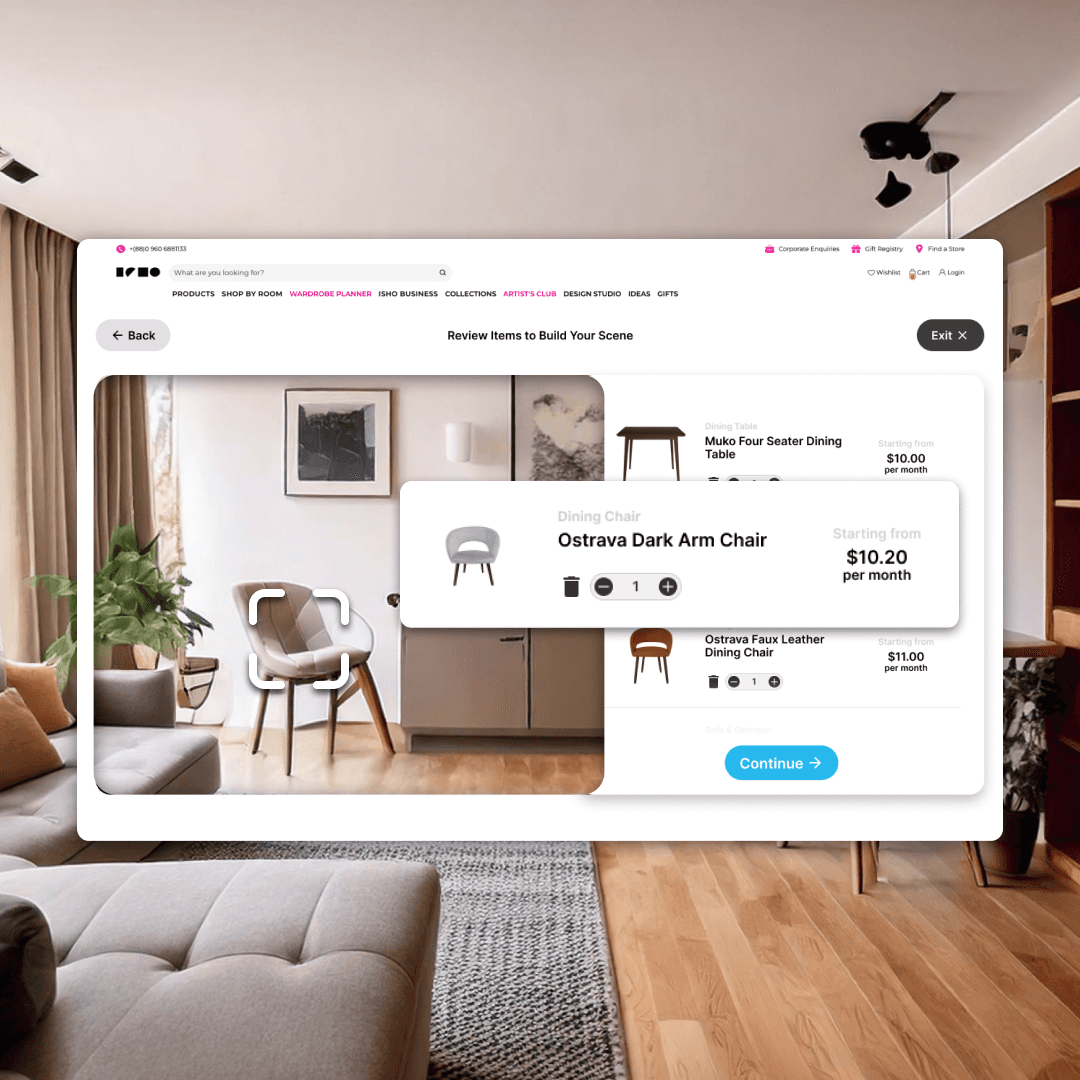
From these generated scenes, the service identifies similar items from ISHO Furniture’s inventory.
Continuous Engagements
While the desktop experience focuses on the initial setup and service activation, the mobile interface is designed for ongoing engagement.
Through the app, customers can share feedback, explore full-purchase options, and manage their subscriptions and maintenance services, ensuring a seamless and dynamic user engagement.
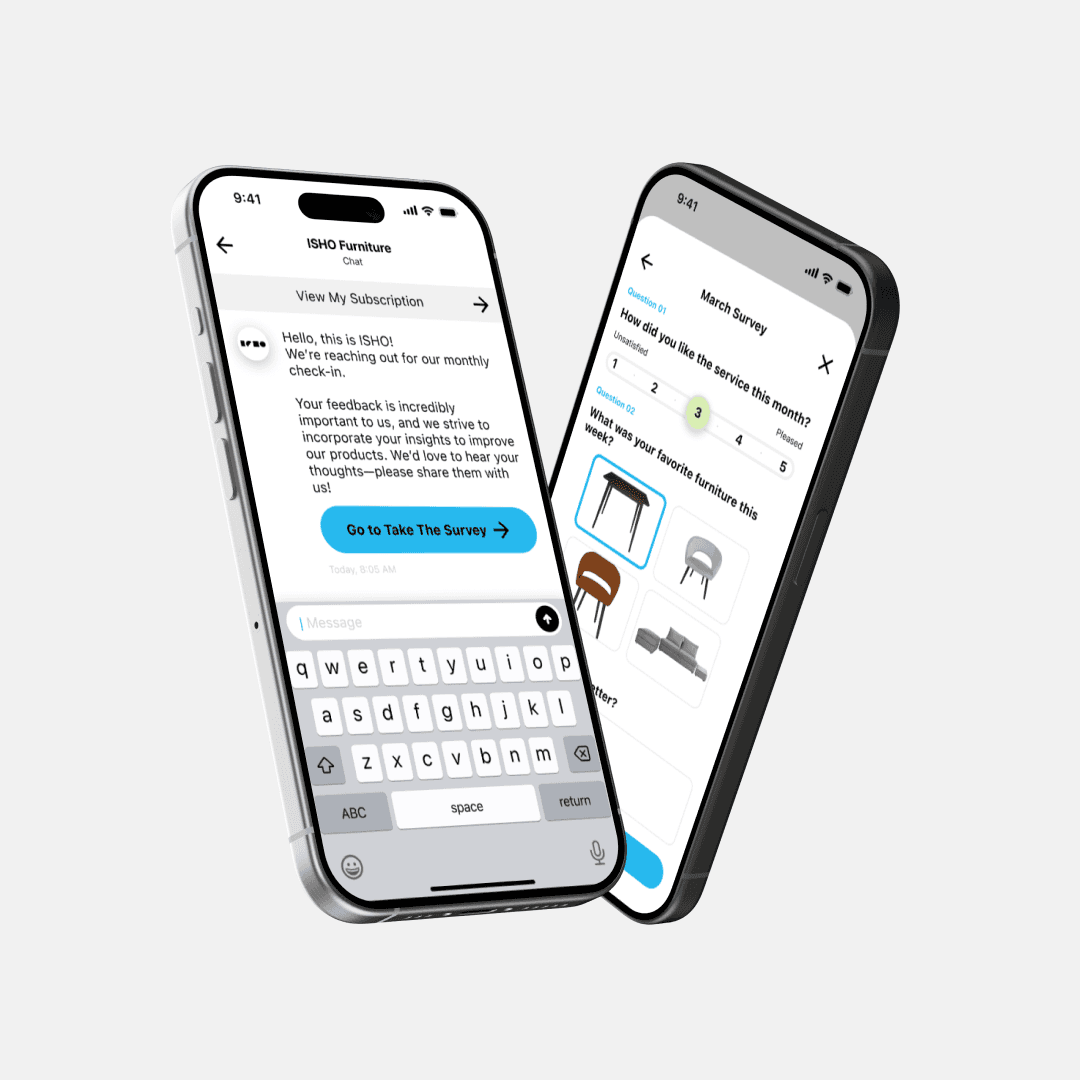
Monthly Feedback ensures the customer satisfaction.
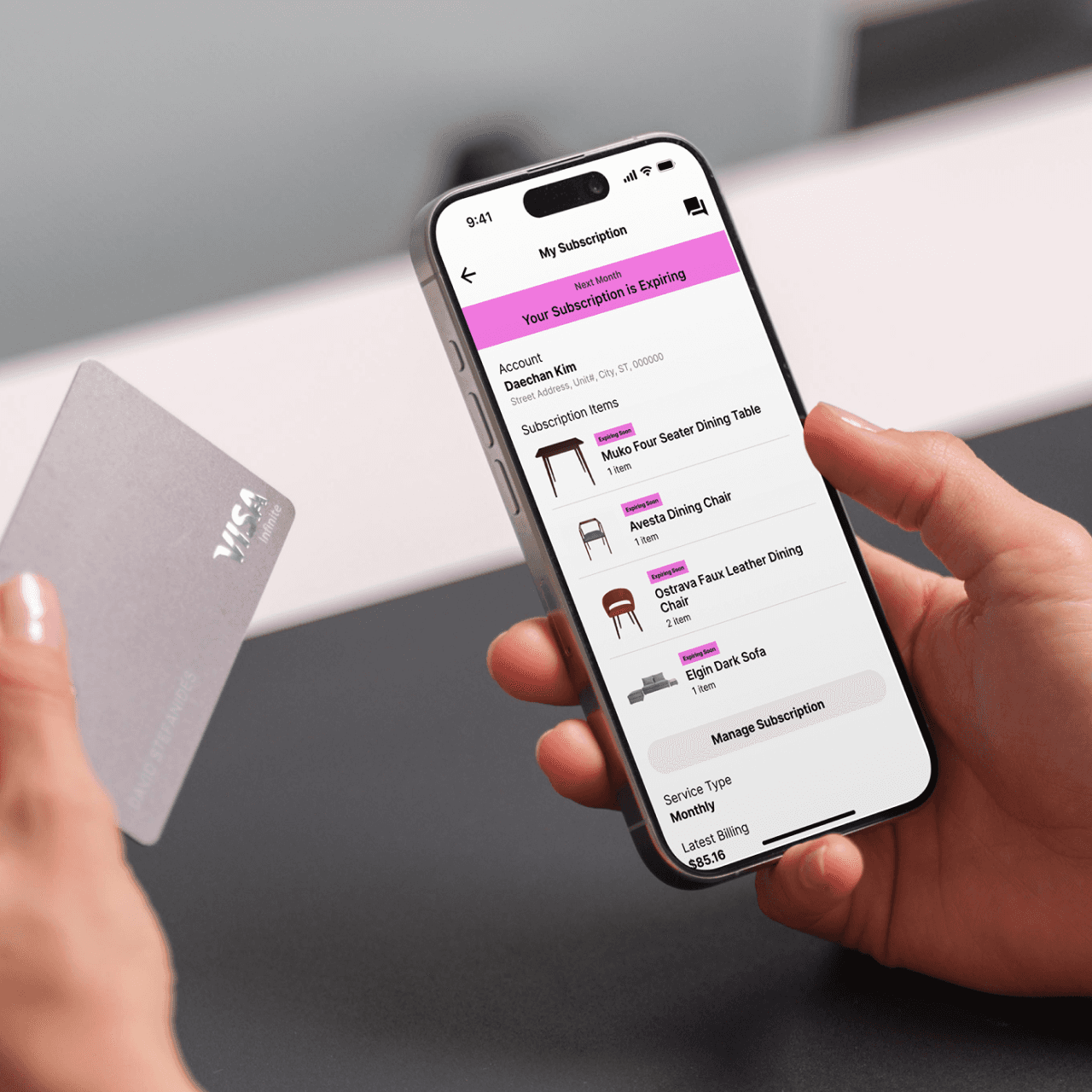
Notifying users with expiring plan lead users to full purchase.
Takeaways
Throughout this project, I was able to fully utilize my skills in planning research, conducting interviews, analyzing findings, and designing interactive interfaces. Successfully managing the research team allowed us to create a comprehensive, user-centric service design by the end of the project.
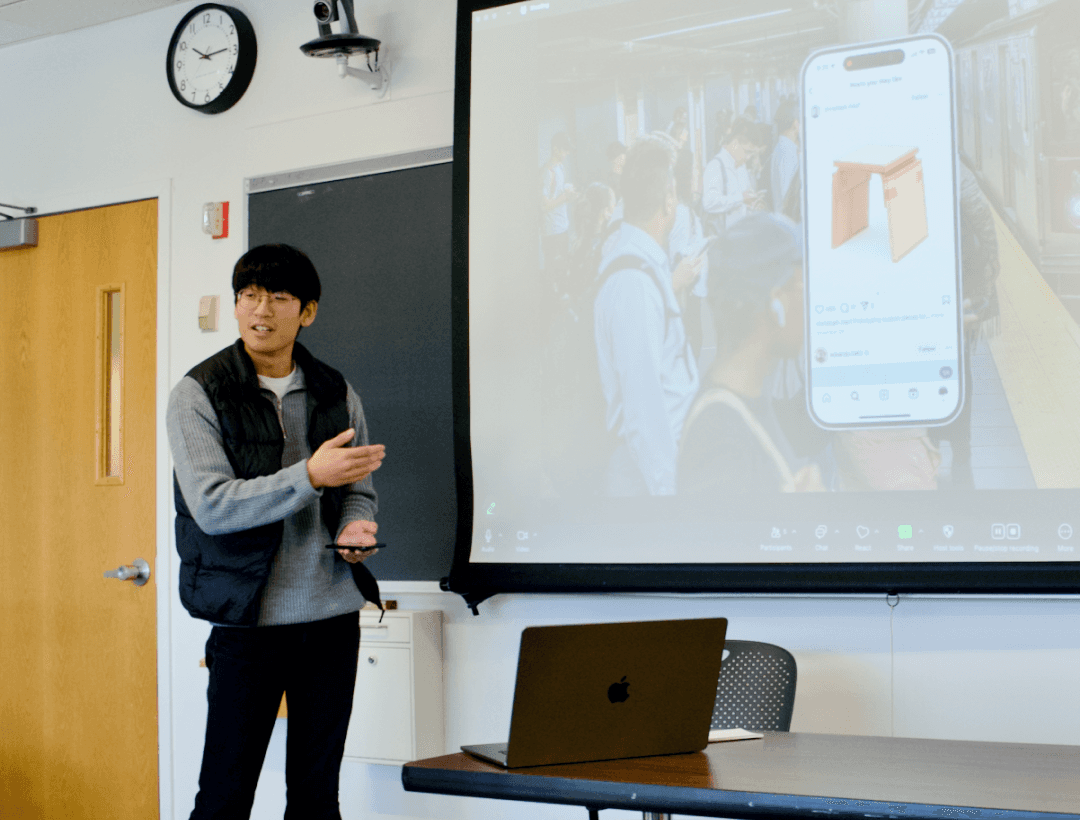
However, the most valuable lesson I learned was the importance of taking action. Preparing the final presentation—a short skit format—helped me identify flaws in the service and gaps between screens that were not as apparent in earlier stages. Being actively acting in the process clarified more than I had expected, reinforcing the idea that design is about action, experimentation, and iteration.